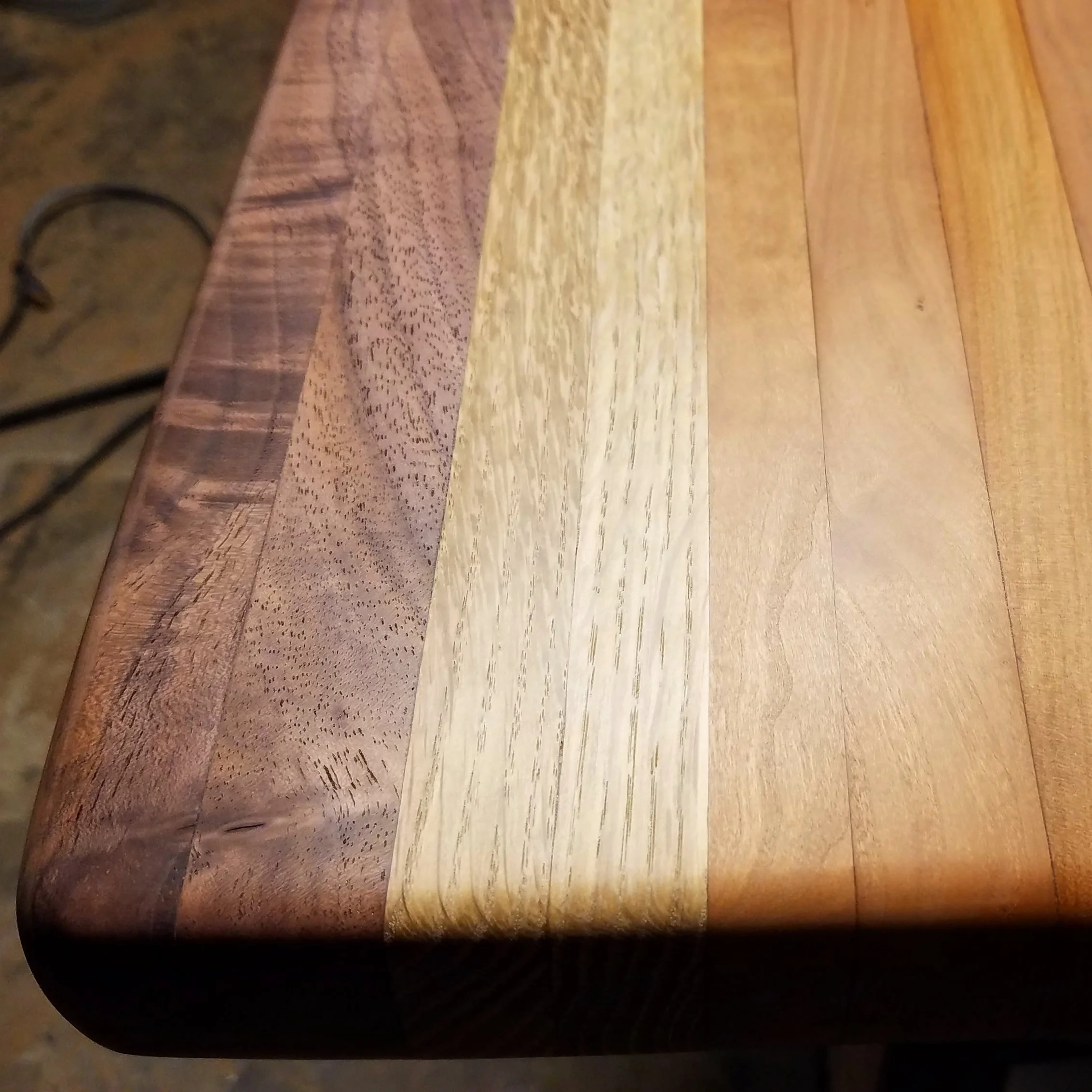
Live-edge and walnut specials are where series geometry stops being enough. A Lumberjack rectangle, a Gathering square, or a pedestal in the 3730–3770 band solves most dining briefs. A slab with natural edge, a walnut field with oak accents, or a one-off span that refuses catalogue lengths is a commission conversation — engineered, not improvised from a Pinterest crop.
Keep series vs custom, pedestal tables, and commission steps open while you read. Dining hubs live at /collection/dining/; custom capacity at /commission/ and custom / millwork.
When the catalogue is the better buy
Live-edge is not automatically more premium. It is a different risk and maintenance profile: irregular edges need clearance from chairs and walls, moisture movement can telegraph across a wide slab, and finish systems must handle food and cleaners without hiding behind “natural” as an excuse. If your room wants predictable seating count, matched chairs, and replaceable symmetry, stay in Lumberjack, Gathering, River Valley, or pedestal series.
Walnut specials shine when you need contrast, a darker field, or multi-species tops that series oak alone will not deliver. They fail when the brief was really “stain oak darker” and a clear finish on white oak would have been cheaper and more repairable. Say the design intent before you lock a rare slab.
Engineering the special
Commissions for live-edge and walnut follow the same design-to-spec discipline as other custom jobs: drawings, base design (legs, trestle, pedestal), finish chemistry, and ship plan. Published engineering time is $150/hr for drawings and workflow optimization — not a slab price pulled from air. Wide tops need base stiffness; character edges need how we treat bark inclusion, voids, and epoxy (or the refusal of epoxy) written down.
Movement is physics. Solid hardwood changes with humidity; a live-edge dining top is not exempt. Orientation, breadboard or floating-fastener strategies, and finish on all faces matter. Our FAQ and care essays cover wood movement in plain language; specials need that honesty up front so year-three surprises are expected, not litigated.

Bases, clearance, and pairing
A spectacular slab on a weak base is a failed table. Pedestal clearance logic from the 3730–3770 essay still applies: centered bases free knees; four-leg bases need apron heights that clear chairs. Live-edge overhangs can catch hips in tight rooms — measure like a small-space problem even in a large dining room.
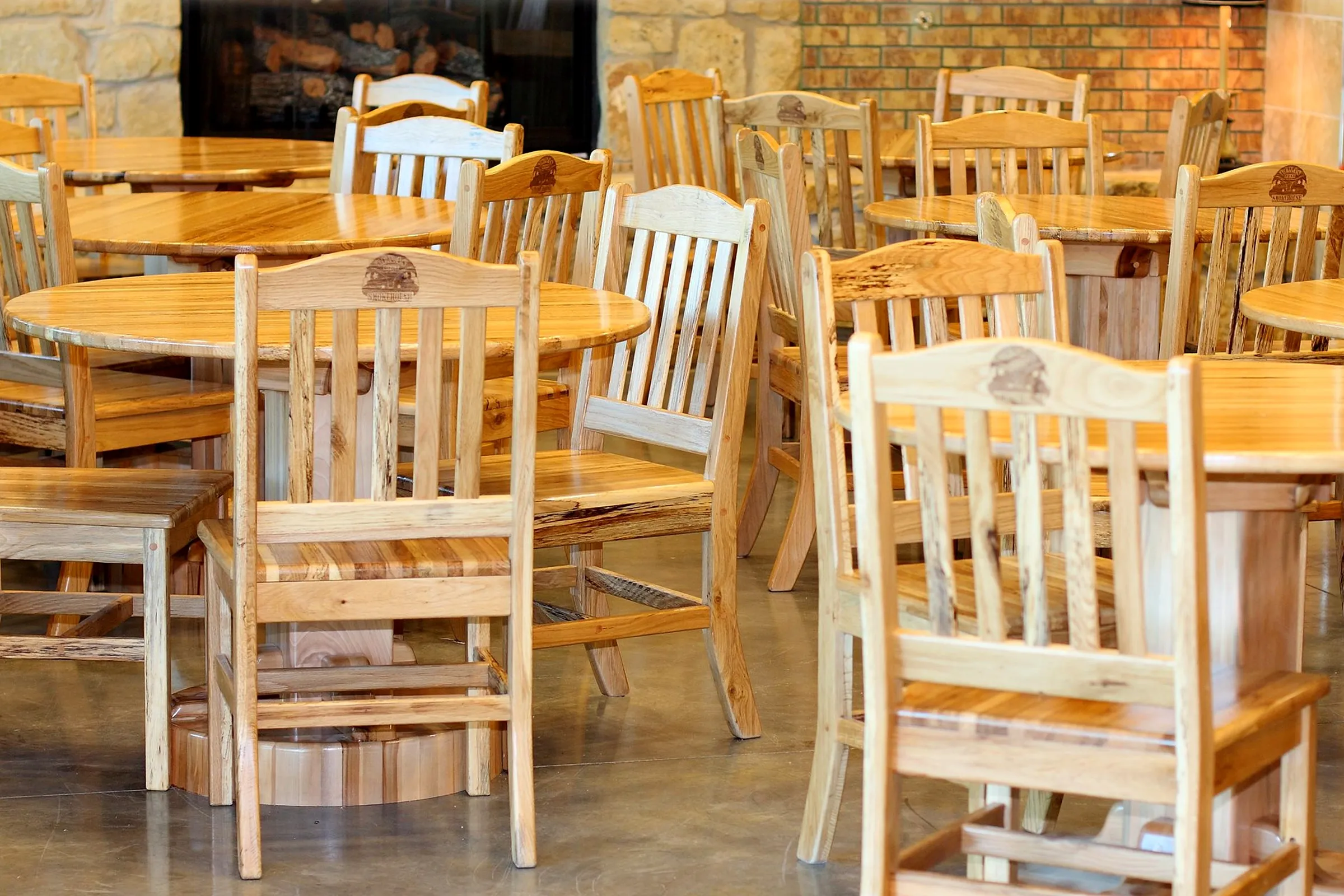
Pairing chairs and benches: series seating (Lumberjack chairs and benches, Gathering stools) can sit under a special top if heights and finishes are coordinated. Do not mix oil-dark walnut tops with film-finished oak chairs without a swatch review — color essays exist for that reason.
Photo folders vs site claims
Shop photo inventory includes a substantial LiveEdge library. On the public site we prefer contextual proof over dumping hundreds of slabs. What you should expect in a quote is species, approximate dimensions, edge treatment, base design, finish system, lead time, and shipping path — not a promise that every dramatic photo in an archive is available stock.
We do not invent client praise for specials. Marketplace reviews on series pieces speak to craft habits; a live-edge commission is judged by drawings and the piece that arrives. Heritage on /heritage/ explains Arkansas hardwood culture; your tape measure and species list explain the special.
Finish and food on special tops
Walnut oils differently than oak; open pores and darker fields show wipe marks and water rings with less forgiveness in some systems. If the table hosts weekly, prefer the cleaner chemistry even if the magazine photo was oil-dark and matte. Conversion varnish vs oil is not anti-walnut — it is pro-honesty about bleach, citrus, and heat. Sample the actual top construction, not a scrap of unrelated flooring.
Multi-species beauty boards and island tops already teach contrast discipline. A walnut live-edge field with oak breadboard ends or oak base can look intentional; it can also look accidental if undertones fight. Bring swatches from the color essay into the commission packet the same day you send slab preferences.
How to start
Send room photos, target seating count, preferred species (walnut, oak, mixed), edge preference, base preference, cleaner list, and hard dates through contact / quote. If a series table already fits, buy the series. If the edge and species are the point, commission deliberately — Moser-class specificity, not slab roulette.


