Mid-century postcard copy from Bradley Lumber Company of Warren still names the product mix in one breath: soft pine, mild-textured oak and other native hardwoods, hardwood flooring, furniture stock, pine millwork, and construction materials. That list is the bridge between a sawmill town and a dining room table — if you read it honestly.
This essay continues the heritage thread started in our Bradley Lumber Company of Warren journal piece. It is not a claim that today’s SKUs shipped in 1907. It is a craft argument: the same county that once cut oak into dimension stock for furniture makers still finishes solid oak pieces for homes and institutional rooms.

What “furniture stock” meant at the mill
Furniture stock is not finished retail furniture. It is dimension lumber and blanks prepared for makers — thicknesses, widths, and lengths that suit chairs, case goods, and table construction rather than only framing. Historic Bradley Lumber was a hardwood engine. Magazine ads in the 1940s pushed flooring under the Bradley Lumber name; Curt Teich postcard material circa 1952 still pairs oak with furniture stock on the reverse.
That matters for buyers who want provenance without mythology. When we say Arkansas hardwood tradition, we mean a verified industrial product mix in Bradley County — not a romantic claim that your table’s exact apron detail was catalogued in 1901. Continuity of place and material is strong enough without inventing SKUs.
Flooring logic vs furniture logic
Flooring and furniture both start as oak, then diverge. Flooring rewards wear layers, milling consistency across thousands of boards, and finishes that survive traffic. Furniture rewards grain orientation for strength and beauty, joinery that holds through seasonal movement, and finishes matched to how a surface is used — dining, prep, or display.
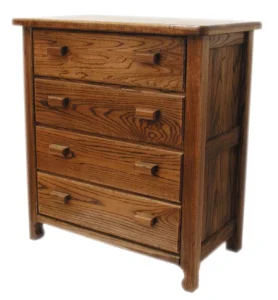
Bradley Brand Furniture sits on the furniture side of that fork while still speaking mill language. Our oak species and grain essay covers why furniture faces and butcher-block faces are not the same argument. The heritage claim is upstream: Warren cut oak for makers; we still make in Warren and Wilmar country.
From stock language to named series
Named series — Lumberjack, Moro, RattleSnake, Saline Creek, Homestead — are how we turn mill-country oak into settled proportion and joinery. Series let you buy language instead of reinventing every apron. Commissions open when the room refuses a catalog answer; see named series vs custom and how a commission works.
Institutional packages in the $50k–$500k band (Medilodge, ConvoCare, BarceloCare, Delta Memorial, and peers listed on our proof strip) need that same honesty: repeatable series language where it fits, Design-To-Spec engineering where counts and durability demand drawings.
Postcard story, modern shop floor
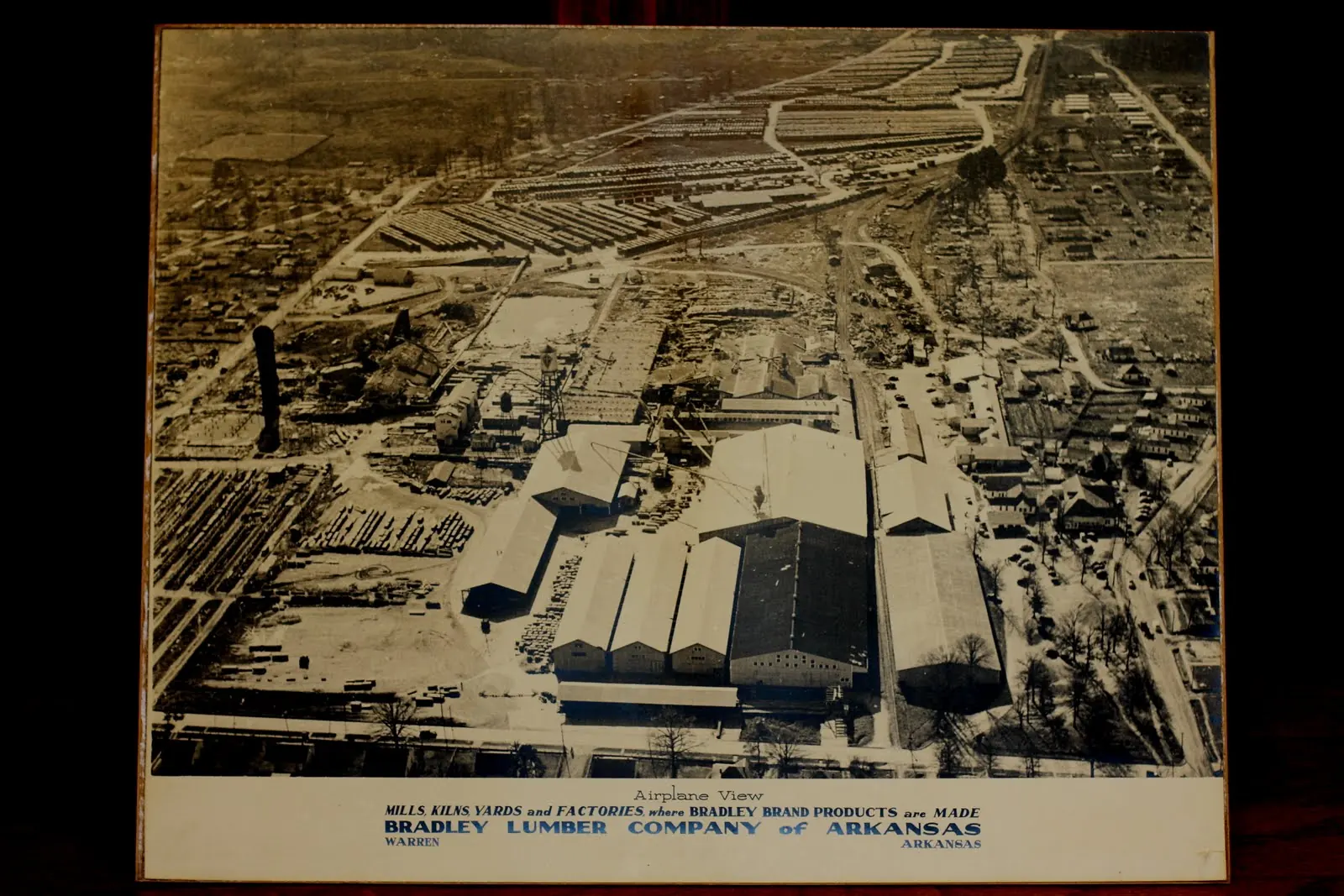
The postcard is useful as evidence of product intent — oak and furniture stock named together — and as visual kinship with a historic “BRADLEY BRAND” diamond mark on plant materials. Visual kinship is not chain of title. Potlatch acquired Bradley Lumber around 1958; Bradley Brand Furniture, LLC appears with a 2008 establishment year in contractor directories. We claim craft and place continuity: crafted in Warren and Wilmar — home to Bradley Lumber’s hardwood mills since 1901.

What to take to a quote
If heritage matters to your purchase, ask for series photos that show unfinished joinery and grain, not only styled lifestyle crops. Bring room measurements, finish preference, and whether the piece must survive institutional cleaning or home dining. Start on Heritage, browse the Collection, then request a quote with photos and dimensions that speed a yes.
Heirloom tables are not nostalgia props. They are the furniture end of a hardwood county that once sold stock to makers — finished here, for rooms that have to last.
Why buyers should care about the stock era
Provenance marketing often collapses into vague “family tradition” language. The furniture-stock record is better: it ties Warren’s mill boom to the furniture industry’s supply chain without requiring a continuous corporate title from Fullerton’s 1901 incorporation through Potlatch’s late-1950s acquisition into today’s LLC. Buyers get a place story they can verify on Encyclopedia of Arkansas, Sanborn maps, and postcard transcripts — then they can judge our modern work on joinery and finish, which is where furniture actually earns its keep.
Designers specifying Arkansas oak for hospitality or healthcare should also care. Institutional packages in the $50k–$500k band succeed when the wood story and the durability brief agree. A dining wing that cites mill-country oak should not arrive with fragile finishes or mismatched series language. Stock history explains why oak was here; shop process explains why the piece will last — see Craft and Working Shop photography on the site.
Reading plant photos without overclaiming
Historic mill photographs — plant aerials, “now and then” frames, Sanborn sheets — are excellent for orientation and terrible as product catalogs. Use them to understand scale, rail adjacency, and town fabric. Do not use them to invent a 1907 dining SKU. Our Heritage page and journal piece on Bradley Lumber keep that boundary explicit. When we embed mill images next to modern tables, the caption should say landscape and tradition, not “this exact table.”
If you are commissioning a piece and heritage imagery matters to your client presentation, ask us for a short caption set that stays inside verified claims. Honest brands do not need borrowed cornerstones — 1903 remains the courthouse year; 1901 remains the mill incorporation year we cite.